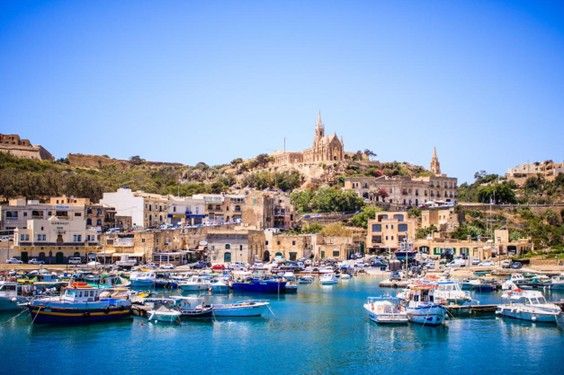
These are the things we like best about life on the island of Gozo, in the archipelago of Malta.
After the market, we walk to our favorite butcher to buy chicken breasts for our evening meal. Next, we pop into the food store for goat cheese and a chat with Johnny, the deli man. The fresh ingredients for our dinner tonight are sustainably and locally sourced from small shops like this.
In Gozo, the connection to land and sea is profound. Most of our food is grown within sight of our terrace—we even know many of the farmers.
Our trolley is heavy as we return to our flat to make lunch and do a little work. Later, we'll go to an 18th-century windmill to view a new exhibit of period furnishings. After dinner, we'll meet friends for a glass of wine in the square, where a local band will cover American rock. It's another beautiful, full, and gratifying day on Gozo.
When we first heard about Malta, we were intrigued by the idea of a "floating nation" in the heart of the Mediterranean. We quickly settled on Gozo, just 2.5 miles from the main island (called Malta, same as the archipelago and the country) and only accessible by ferry.
Its small size—about 26 square miles—lends itself to a slow pace of living and close-knit community. And the rolling hills and thriving terraced farms spoke to us and our desire for a plant-based diet.
While it's easy to eat well anywhere in the Mediterranean, this warm little pocket on Gozo offered an uncrowded alternative that's easy on new arrivals… even "English-only" expats from the US. That's because Malta is a dual-language melting pot, with Maltese and English spoken widely, and all government business conducted in English.
Throughout the centuries, Malta has been shaped by not one or two but twelve dominant cultures, each influencing the language, cuisine, architecture, religious practices, and so much more. Simply put, this is a true crossroads of civilizations.
Inhabited since the Bronze age, with prehistoric temples that predate even Stonehenge, Malta has endured through Medieval invasions, Napoleonic sieges, and world wars (it was once proclaimed the most heavily-bombed place on earth).
Sun-Drenched Summers and Mild, Gentle Winters
Graced with warm, sun-drenched summers and mild, gentle winters… abundant fresh water and food… Malta was a magnet that lured Phoenicians, Romans, Greeks, Byzantines, Arabs, and many other one-time masters of this land. A British colony for more than a hundred years, it made great strides after independence, investing in education, healthcare, and public services… and eventually joining the European Union.
Today, though restaurant menus are generally in English, life in Malta reflects its glorious mixed-Mediterranean heritage. Vegetables, whole grains, nuts, olive oil, and fish rich in omega-3 fatty acids feature heavily in the daily diet. Here we eat swordfish, tuna, lampuki (dorado), grouper, as well as shrimp and other shellfish that are plentiful and play a significant role in Gozitan's daily diet. We love it all—especially the price!
And our health has improved in many ways, including lower blood pressure, better sleep, less arthritis pain, and a more positive outlook.
Our village hosts free music and dance performances from March through September. For our Saturday "date nights" we dress up and join friends at a table in the square. We share a pizza and wine from one of the open eateries and enjoy the music and company. We also have a vibrant visual arts scene, with artists showcasing their talents through painting, sculpture, and photography. Galleries and studios dot the island, and the annual Victoria International Arts Festival is a summer highlight.
There are festivals for crafts, vintage cars, fashion, wine, film, and music of all types—folk, jazz, rock, symphony, and opera. Each village also has a festa—a week-long festival to celebrate their patron saints.
It's natural to wonder if you'll be welcomed when moving to a new community, especially one in another country. But we've found that hospitality on Gozo is abundant. We were immediately accepted into our village. Residents would ask, "How long is your holiday?" After we answered, "We live here now," we were quickly let in on the locals' secrets: the best places to shop, a good restaurant, or a favorite beach.
You can integrate quickly, too. Gozo has numerous groups that provide community and support. Gozo Expats, Americans in Gozo, and local English-speaking clubs host social and networking gatherings. We still attend regular meet-ups and visit the online forums to find and share resources.
Does our life sound like your dream come true? Then come scout it out. You can stay on Gozo without a special visa for 90 days within 180 days. Come for as long as you can manage and immerse yourself. Find a vacation rental (we generally use Airbnb) and live like a local: shop at the weekly market and eat at the village café. Attend festivals and celebrations—there are bound to be some—and say "hello" to locals and expats.
You'll know pretty quickly if Gozo is for you.






No comments:
Post a Comment