| | | Look, we've all seen the headlines about AI. It's the biggest shift in human productivity since the steam engine. But there's a dirty little secret that the Silicon Valley types don't like to talk about in their shiny keynotes. AI is hungry. Not just "a little extra juice" hungry - it's "drain the local grid and ask for seconds" hungry. | Here's the deal: our current energy setup wasn't built for this. Solar is great when the sun is out. Wind is fine when the breeze is blowing. But an AI model processing billions of data points at 3:00 AM doesn't care about the weather. It needs power that's always on, always reliable, and increasingly, always clean. That's where Uncle Sam is stepping in. We're not just talking about incremental changes; we're talking about a total overhaul of how we think about "baseload" power. The Department of Energy (DOE) just dropped a strategy that confirms what I've been telling you: Hydrogen is no longer a "future" tech. It's the "now" tech. And it's the only thing that can keep the American AI lead from flickering out. |
| | |
| | | The $2/kg Threshold: Breaking the Economic Barrier | | For years, the knock on hydrogen was simple: it's too expensive. People called it the "fuel of the future" because it seemed like it would always stay there. Well, the future just arrived. As of this month, February 2026, the DOE has officially put its weight behind a strategy to slash costs to $2 per kilogram. | This isn't just a goal on a whiteboard. It's backed by a massive $750 million funding push specifically designed to drive down the cost of electrolysis - the process that actually makes the stuff. When you combine that with the $1 billion electrolysis program already in motion, you start to see the scale of the commitment here. We're talking about the "1 1 1" Earthshot goal: $1 for 1 kilogram of clean hydrogen in 1 decade. We're already hitting the $2 mark, and that is the magic number where industrial-scale AI data centers start making the switch from the grid to their own dedicated hydrogen power plants. | The DOE's Long-Term Strategy for Hydrogen, published just a week ago on February 6, 2026, makes it clear: this is a fast-tracked priority. They're pressuring the industry to scale because they know we can't wait until 2040. If we want to maintain our sovereignty in the AI race, we need the fuel to run the engines today. This isn't just about being green; it's about being capable. |
| | |
| | | The Utah Blueprint: Real Steel in the Ground | | If you want to know where this is actually happening, look at Delta, Utah. While the pundits are arguing on TV, Chevron and Mitsubishi are out there building the Advanced Clean Energy Storage project. This isn't some pilot program in a lab - it's a utility-scale beast that's starting operations right now in 2025 and scaling through 2026. | Here's why this matters to you: they're producing 100 metric tons of green hydrogen every single day. But the real "secret sauce" is how they store it. They're using massive salt caverns. Think of these as giant, natural batteries that don't degrade. When the sun is shining in the desert, they use that excess energy to make hydrogen. When the sun goes down and the AI data centers are still humming at full tilt, they pull that hydrogen out of the caverns and burn it for 24/7 power. | This is the "brand-new power plant" model the DOE is fast-tracking. It's the first of its kind, but it won't be the last. There are already 76 green hydrogen projects worth a staggering $36 billion planned over the next five years across Texas, California, and Arizona. We're seeing the birth of a new American industrial sector, and it's being built to serve the most demanding customer in history: Artificial Intelligence. |
| | |
| | | Sponsored Content 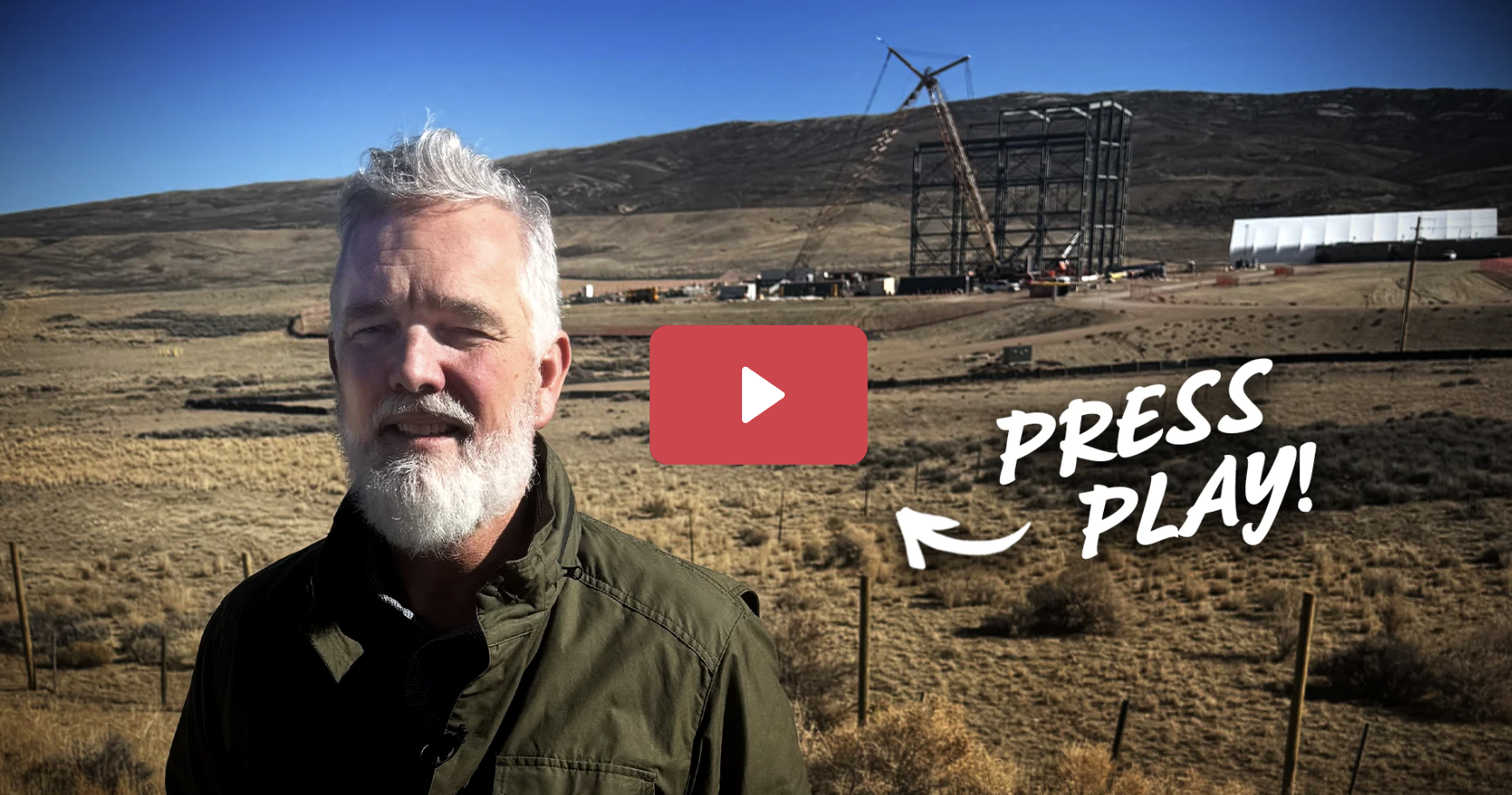
While NVIDIA was the standout winner of AI's first boom, the next AI wealth explosion relies on something I call "AI Fuel".
The Department of Energy is fast-tracking development of a brand-new kind of power plant, and this industry could see 33,000% growth in the coming months.
According to my research, one little-known company could be named as the key "AI fuel" supplier.
Click Here |
|
| | |
| | | The $8 Billion Hub Strategy: Decentralizing the Grid | | The government doesn't often move fast, but when they drop $8 billion for "Regional Clean Hydrogen Hubs," you better pay attention. This money, provided through the Bipartisan Infrastructure Law, is being funneled into the economy at a rate of $1.6 billion annually through this year, 2026. | What does a "hub" mean for an investor or a builder? It means we're moving away from a fragile, centralized grid that can be knocked out by a single storm or a cyberattack. We're building regional networks where the power is produced, stored, and used all in the same area. | Take the project in Vernon, California. Avina Clean Hydrogen is spinning up a $20 million facility that generates enough fuel for 100 fuel cell trucks daily. Or look at the Raven SR and Chevron project in Richmond, California. They're literally taking 100 tonnes of landfill waste per day and turning it into about 2,000 tonnes of green hydrogen per year using steam and CO2 reformation. This is American ingenuity at its best - turning trash into the high-octane fuel needed for the digital age. These regional hubs are the backbone of the "AI Fuel" network, ensuring that no matter what happens to the national grid, our critical tech infrastructure stays online. |
| | |
| | | The Texas Scale: A $4 Billion Bet on the Future | If you want to see the sheer scale of this ambition, look at Texas. AES Corporation is working on a $4 billion facility that's set to produce over 200 metric tons of hydrogen daily. They're powering it with a massive 1.4 GW of wind and solar. | Now, some skeptics will tell you that 2030 is a long way off for a project of that size. But here's what they're missing: the infrastructure is being laid now. The jobs - 1,300 of them - are being created now. This is the same kind of massive industrial buildup we saw during the space race or the expansion of the interstate highway system. | The DOE's roadmap targets 10 million metric tonnes of clean hydrogen by 2030. To get there, they're not just looking at the big guys. In Casa Grande, Arizona, Air Products is operational in 2026, using specialized electrolyzers to produce 10 metric tons daily. It's this mix of massive $4 billion plants and smaller, agile facilities that creates a resilient energy ecosystem. AI data centers aren't just looking for power; they're looking for sovereign power that isn't dependent on foreign supply chains or unstable global markets. |
| | |
| | | Your Move: Anchoring the AI Inversion | Here's the bottom line. We've spent the last few years obsessed with the "brains" of AI - the chips, the models, the software. But we've reached the point where the physical constraints of reality are catching up. You can have the fastest chip in the world, but if you can't plug it into a 24/7 power source, it's just a very expensive paperweight. | The data is clear. The DOE is fast-tracking the $2/kg target for 2026. The funding is flowing - nearly $10 billion in direct infrastructure support. And the projects are moving from the drawing board to the dirt. This is the "AI Fuel" revolution. It's how we ensure American tech remains the gold standard. | My tip? Stop looking at the software for a minute and start looking at the plumbing. The companies building the electrolyzers, managing the salt caverns, and securing the regional hubs are the ones holding the keys to the kingdom. We're talking about an industry positioned for explosive growth because it solves the one problem AI can't solve for itself: the need for reliable, 24/7 energy. |
| | |
|
|




No comments:
Post a Comment