But if you bring a lot up front, many countries will give you residency rights without requiring you to use them very much.
Golden visas aren't cheap, especially in Europe.
Although it's possible to get one for €100,000 ($118,000) or so if you invest in start-up businesses, most folks are looking at a minimum of €500,000. But there's a cheaper and (often) faster alternative: buying a second citizenship and the passport that goes with it. This is known as citizenship by investment, or CBI.
The number of people asking me about it has tripled or quadrupled since the beginning of this year.
Why Do Countries Sell Citizenship?
Most people (including many here at IL) routinely talk about "getting a second passport." That makes it sound like you can simply buy a travel document.
But you can't, at least not legally. To get a passport from another country, you must first become its citizen.
Most countries see selling citizenship as incompatible with modern nationhood. And yet some countries do… and more are planning to join the "citizenship market." The history of CBI explains why.
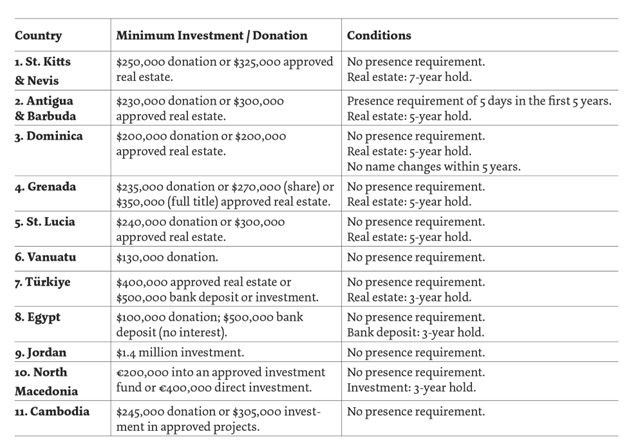
In 1984, the Caribbean nation of St. Kitts and Nevis launched the world's first formal CBI program. It allowed foreign nationals to acquire citizenship through real estate purchase or government donations.
In the 1990s and early 2000s, other Caribbean nations including Dominica, Grenada, Antigua and Barbuda, and St. Lucia launched their own CBI schemes. Like St. Kitts, these countries saw CBI as a way to raise revenue without raising taxes on their tiny populations.
Qualifying investments included a government donation, real estate purchase, or business investment.
These island nations adopted CBI because they couldn't generate enough revenue to fund public expenditure through exports and tourism. But they realized that they had one thing that no one else in the world could sell: their own citizenship.
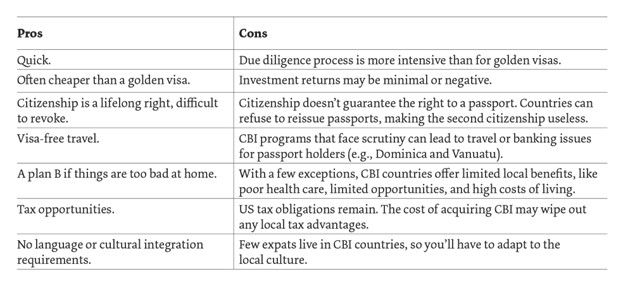
And with the help of self-interested migration agencies, they envisaged a big global market for CBI from people whose own passports limit their travel freedoms and flexibilities. The fact that such people rarely want to live in or even visit CBI countries means that it's a win-win situation for both parties, since it doesn't require more housing or other resources to accommodate them.
CBI remained under the radar until the 2010s. But after the global financial crisis, it became more well known.
Today, demand for CBI remains strong from wealthy individuals seeking mobility, security, and asset diversification. As always, the core requirement is an investment or donation. But that's not the only way CBI programs compete for market share. Other points of competition include how much time the new citizen must spend in the country, and how long they must keep the qualifying asset or deposit.
In addition, eight countries have recently announced new CBI programs: Argentina, Armenia, Botswana, Nauru, São Tomé and Príncipe, Sierra Leone, and the Solomon Islands.







No comments:
Post a Comment