| | | Look, the American dream isn't just about building something from scratch - it's about having the grit to fight for what's rightfully yours in the marketplace. For a century, a certain mouse-eared giant held a virtual monopoly on the stories that shape our childhoods. But the winds are shifting. We're seeing a massive inflection point where legacy gatekeepers are stumbling under the weight of their own overhead, while lean, tech-heavy operators are capturing the high ground. | The news hitting the wires this week isn't just about "cartoons." It's about intellectual property (IP) sovereignty and the $2 trillion global entertainment market. We've watched Disney's entertainment operating income slide by 35% to $1.1 billion in Q1 2026. That's a signal, not a fluke. When a titan like that loses $168.7 million on a single live-action Snow White remake, you have to ask: who is actually winning the war for the next generation's attention? | The answer lies in a decade-long legal trench war that just concluded at the U.S. Patent & Trademark Office. While the big studios were busy with expensive reshoots and PR fires, a group called Elf Labs was quietly securing the rights to the most valuable characters in history. They didn't just ask for a seat at the table; they rebuilt the table using AI, AR, and a legal strategy that would make a constitutional scholar nod in respect. This is about the democratization of icons - and for the American investor, it's a masterclass in strategic positioning. |
| | |
| | | The Ten-Year War for the Public Domain | In this country, we respect the rule of law and the power of a well-executed patent strategy. For ten years, Elf Labs stayed in the fight at the USPTO. They weren't looking for a quick exit; they were looking for total IP dominance. They've now secured over 500 trademarks and copyrights for the heavy hitters: Cinderella, Snow White, Rapunzel, Belle, and more. | Why does this matter to you? Because the Disney Princess franchise has historically generated over $45.4 billion in revenue - mostly from merchandise. But that revenue was built on a closed system. By winning these trademarks, Elf Labs has effectively unlocked a $45 billion vault. They aren't just "using" these characters; they own the rights to deploy them in ways the old guard simply can't or won't. | | This isn't just a legal win; it's a strategic beachhead. When you control the trademarks for Snow White and Cinderella in a $2 trillion market, you aren't just a content creator - you're a landlord. And as any operator knows, it's better to own the land than to rent the building. Elf Labs has already turned this into $15 million in royalties and sales across 30+ countries. They've funded three TV series using this IP. They didn't wait for permission to innovate; they used the American legal system to secure the right to disrupt. |
| | |
| | | The Tech Edge: Why "Static" is Dead | | If you're still thinking about princesses as plastic dolls on a shelf, you're looking at the rearview mirror. The future of this $45 billion asset class is interactive, immersive, and powered by proprietary tech. Elf Labs isn't just a media company; they're a deep-tech outfit with 12 patents focused on ultra-high fidelity 3D streaming and AI-driven talking characters. | Here's the deal: kids today don't want to just watch a movie; they want to talk to the characters. They want to step into their worlds. Disney's recent struggles - like that $170 billion market loss - stem from a reliance on the old "theatrical-to-merch" pipeline. That pipeline is leaking. Elf Labs is using patented compression technology to stream interactive 3D worlds to any device, bypassing the need for $300 million production budgets that can be sunk by a single bad opening weekend. | We're talking about AI-powered dolls and AR experiences that actually respond to a child's voice. This is the "Pokémon" model on steroids. Pokémon hit $113 billion in revenue because it mastered the link between the digital experience and the physical product. Elf Labs is applying that same logic to the princess genre, but with a tech stack that makes legacy animation look like a flipbook. When you can deliver high-fidelity 3D worlds to over 100 million customer connections via partnerships like the one they just inked with T-Mobile, the traditional studio model starts to look very, very fragile. |
| | |
| | | Sponsored Content 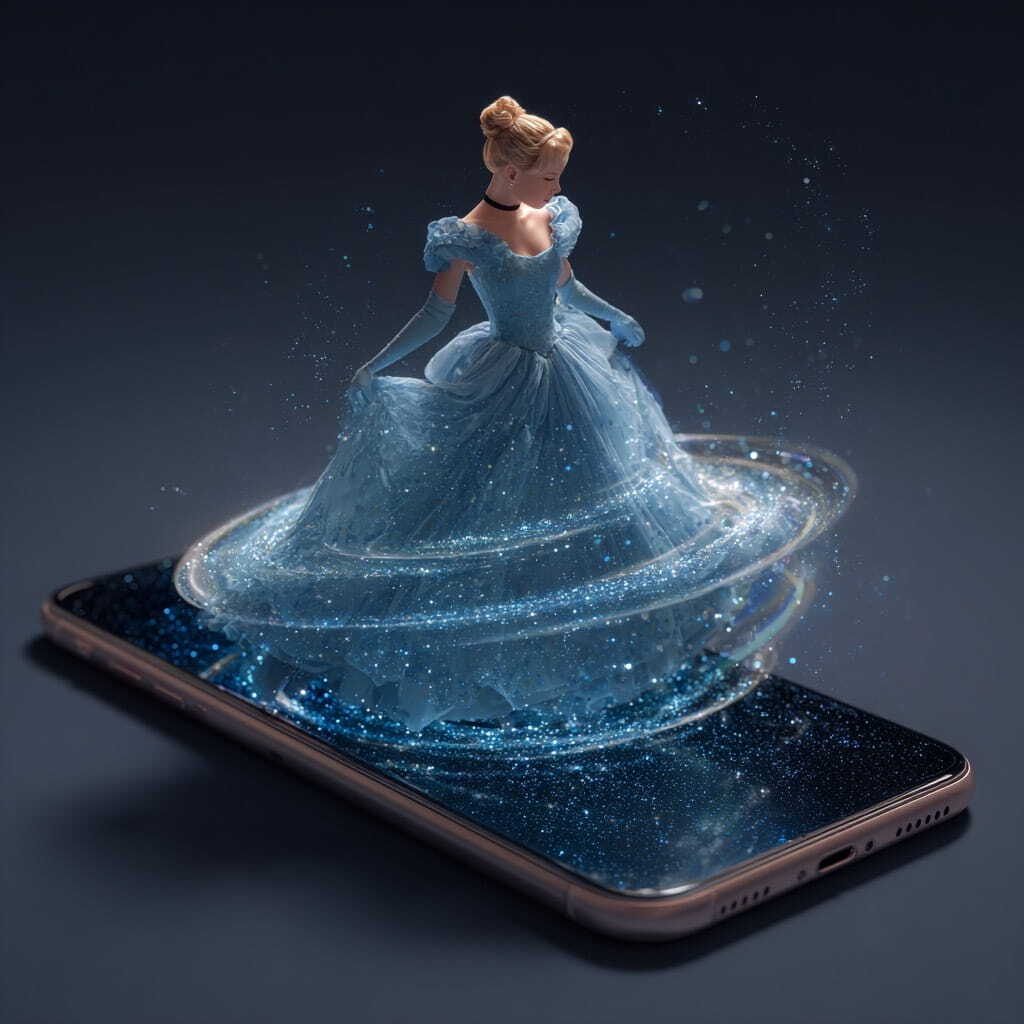
Disney's princess franchise generated $45.2B.
Now Elf Labs did something unprecedented: after a 10-year legal effort at the U.S. Patent & Trademark Office, they secured 500+ trademarks and copyrights featuring Cinderella, Snow White, Rapunzel, and more.
Now they're unleashing these characters into a $2T global market, powered by patented AI, AR/VR, and proprietary compression technology.
For a limited time investors can earn up to 35% bonus shares.
Invest Now
Disclaimer: This is a paid advertisement for Elf Labs' Regulation CF offering. Investments in private placements, and start-up investments in particular, are long-term, illiquid, speculative and involve a high degree of risk and those investors who cannot afford to lose their entire investment should not invest in start-ups. Please read the offering circular and related risks at elflabs.com. The valuation is set by the Company and there is currently no public market for the Company's Common Stock. Nasdaq ticker "ELFS" has been reserved by Elf Labs and any potential listing is subject to future regulatory approval and market conditions. |
|
| | |
| | | The Disruption of the Legacy Model | | Let's talk about the "Snow White" problem. Disney's live-action remake cost $336.5 million to produce. It grossed $205.7 million. That's a theatrical loss of $168.7 million. Now, Disney had a win with Zootopia 2 hitting $1.8 billion, but that kind of volatility is a nightmare for anyone looking for consistent growth. The "blockbuster or bust" model is a relic of the 20th century. | Elf Labs is taking a different path - the American path of efficiency and innovation. By using AI and AR, they can create immersive content at a fraction of the cost of a traditional live-action shoot. They don't need to spend $300 million on reshoots and sets that might catch fire (literally, in Disney's case). They are leveraging their 500+ trademarks to enter a market where the demand is already proven - $45.4 billion in proven demand - without the massive overhead of the legacy studio system. | This is a classic "innovator's dilemma" play. Disney is trapped by its own history and its massive, expensive infrastructure. Elf Labs is unencumbered. They can pivot, they can scale, and they can use their 12 patents to deliver experiences that a traditional film simply can't match. When you see a 35% drop in operating income from a market leader, it's time to look at who is building the alternative. |
| | |
| | | Distribution is King: The 200 Million Home Play | A great product is useless if you can't get it to the customer. This is where the rubber meets the road. Elf Labs didn't just win in court; they won in the boardroom. They recently signed a $3.5 million deal with CompaxDigital and T-Mobile. This isn't just about a one-time payment; it's about distribution. | This partnership is designed to put Elf Labs' princess IP and tech within reach of over 100 million customer connections in the U.S. Think about that scale. While the big studios are fighting over theater screens and trying to prop up their own struggling streaming services, Elf Labs is hitching a ride on the infrastructure that already exists in every American pocket and living room. | This is how you scale a $2 trillion opportunity. You don't build the pipes; you own the water flowing through them. By integrating their AI characters and AR worlds directly into the T-Mobile ecosystem, they are lowering the barrier to entry for millions of families. It's a move that mirrors the merchandise-driven growth of giants like Pokémon and Winnie the Pooh (which sits at roughly $80 billion+). Elf Labs is positioning itself to be the tech-forward successor to these franchises, using a lean, partnership-heavy model that prioritizes reach over ego. |
| | |
| | | The Investor's Inflection Point: $ELFS | Here is the bottom line. We are looking at a company that has spent a decade de-risking its position. They won the legal battle for the trademarks. They secured the patents for the tech. They've proven the revenue model with $15 million in royalties. And now, they've reserved their Nasdaq ticker: $ELFS. | In the world of investing, we look for "inflection points" - those moments where years of preparation meet a massive market opportunity. Elf Labs is sitting right at that crossroads. They are taking the most recognizable characters in the world and rebooting them for the AI age. They aren't just competing with Disney; they are providing a tech-driven alternative to a model that is clearly showing its age. | For the executives and investors who follow Uncle Sam Tips, the signal is clear. The "Princess Economy" is being disrupted. The legal barriers have fallen, the tech is locked in, and the distribution is scaling. Whether it's the 35% bonus shares or the upcoming Nasdaq listing, the momentum is moving away from the legacy giants and toward the operators who know how to blend IP with innovation. Don't wait for the mainstream media to catch up - by then, the ground will have already been claimed. |
| | |
| AI in HR? It's happening now. | | Deel's free 2026 trends report cuts through all the hype and lays out what HR teams can really expect in 2026. You'll learn about the shifts happening now, the skill gaps you can't ignore, and resilience strategies that aren't just buzzwords. Plus you'll get a practical toolkit that helps you implement it all without another costly and time-consuming transformation project. | Get the free report today. |
|




No comments:
Post a Comment