| | | Look, if you've opened up your phone or turned on a screen anytime in the last few weeks, you've seen them. | The humanoid robots. | They're walking through warehouses, picking up boxes, and moving with a fluid, almost eerie grace. It's the kind of footage that makes you stop and stare. Recently, Figure AI's CEO Brett Adcock dropped a video showcasing their Gen 3 humanoids - Figure 03 - rolling right onto California production lines this year. The endgame he laid out? We're looking at fully robot-built robots in just 24 months, and home robots handling complex, long-horizon chores by the end of 2026. | The footage is incredibly smooth. It's got that viral, undeniable appeal. | But let's cut through the noise right now. | As American builders, executives, and investors, we can't afford to get distracted by shiny objects. The metal, the actuators, the sleek chassis - that's all just the puppet. The real breakthrough - the thing that's actually going to rewire our industrial base and defend our economic sovereignty - is the invisible brain pulling the strings. | Robot Magazine just called 2026 the pivotal year for humanoid robots, and they hit the nail on the head. But it's not because the hardware suddenly got a fresh coat of paint. It's because generative AI is finally enabling these machines to make autonomous decisions. We're talking about natural language understanding and adaptive learning from outfits like Boston Dynamics, Hanson Robotics, and Tesla. | These machines aren't just blindly following a pre-written script anymore. They are interpreting complex instructions on the fly and executing multi-step tasks in chaotic, real-world environments like active factory floors. | That's the shift. Hardware scales linearly. It takes time, steel, and sweat. But software? Software scales exponentially. The intelligence layer is what's going to separate the winners from the losers in this next great industrial race. | |
| | |
| | | The "ChatGPT Moment" Hits the Factory Floor | | If you want to understand the true magnitude of what's happening, you have to look at the reasoning engines powering these new machines. | We've seen this movie before in the digital space. Now, it's going physical. | Take a look at the partnership between Figure AI and OpenAI. According to the folks over at YoungWonks, the integration of large language models (LLMs) into the Figure 02 unit has created a literal "ChatGPT moment" for robotics. There was a viral demo recently where the robot was told to find something to eat. It looked at a table full of junk, identified an edible apple sitting in the trash, and picked it out. | Think about the mental model required for that. The robot wasn't programmed with a rigid line of code saying, "If apple is at coordinates X-Y, pick it up." It had to understand the concept of food, recognize the apple, understand the context of the trash, and physically execute the task without crushing the fruit. | That is human-like intelligence delivering measurable results beyond just looking cool on camera. | Tesla's Optimus is playing the exact same game. The latest footage lighting up YouTube shows Optimus fusing advanced language and vision models to achieve unprecedented autonomy. We're not just talking about recognizing a stop sign anymore. Optimus is now understanding speech, reading human emotions, grasping context, and anticipating human intent. | For the executive trying to figure out their go-to-market playbook, this is the signal in the noise. | When a machine can understand intent, you no longer need a team of highly paid engineers to babysit it. A warehouse manager can simply walk up to a unit and say, "Hey, prioritize the heavy pallets by the loading dock, and watch out for the forklift leaking oil in aisle four." | The robot adapts. It reasons. It executes. | This is the exact same type of behavioral analysis and outcome prediction that Fortune 1000 brands use to map consumer behavior. The only difference is that now, the software has arms and legs. |
| | |
| | | Sponsored Content Humanoid Robot Footage: What Everyone Missed

The same type of AI powering this new wave of robotics is the kind companies use to analyze behavior, predict outcomes, and eliminate guesswork in creative decisions.
RAD Intel builds that intelligence layer - the kind already delivering measurable ROI (per SEC filings) for Fortune 1000 brands that want to know what will work before spending money.
Secure your $0.85 entry
Disclosure: All financial metrics tied to SEC filings; 2026 revenue unaudited. This is a paid advertisement for RAD Intel made pursuant to Regulation A+ offering and involves risk, including the possible loss of principal. The valuation is set by the Company and there is currently no public market for the Company's Common Stock. Please read the offering circular and related risks at invest.radintel.ai. |
|
| | |
| | | The $13,000 Tipping Point | Now, let's talk about the real-world constraints. Because grand visions are great, but if the math doesn't pencil out, the whole thing stays locked in an R&D lab in Silicon Valley. | Here is the data point that should make every supply chain operator sit up straight: the cost of this technology is absolutely cratering. | A fresh report from Deloitte just laid out the brutal, undeniable economics of this shift. In 2025, the material cost for a humanoid robot was hovering around $35,000. Today, in 2026, that cost has plummeted to $13,000. | Read that again. A $13,000 capital expenditure for a machine that can work three shifts a day, doesn't get tired, and gets smarter every time it connects to the network. | But Deloitte points out something even more critical than the sticker price. They highlight the rise of onboard neural processing units - NPUs. | In the early days, these robots had to send every piece of visual data up to the cloud to figure out what to do next. That created latency. If a box is falling off a shelf, a robot can't wait two seconds for a server in Virginia to tell it to catch it. With NPUs, the AI is processed locally, right there in the robot's "skull." It enables real-time, low-latency decisions without relying on an internet connection. | | This is massive for American resilience. | It means these machines can operate in dead zones, deep underground in mines, or in secure defense facilities where cloud connectivity is a liability. It means the "agentic AI brains" can function safely alongside human workers in tight spaces. | When the cost drops to $13,000 and the machine no longer needs a constant Wi-Fi tether to function, the adoption curve goes vertical. It's no longer just a toy for the mega-corporations. It's a tool for the mid-market manufacturer in Ohio trying to keep their assembly line running amidst a labor shortage. |
| | |
| Sponsored Content WARNING: Footage From Wyoming Stunned Everyone
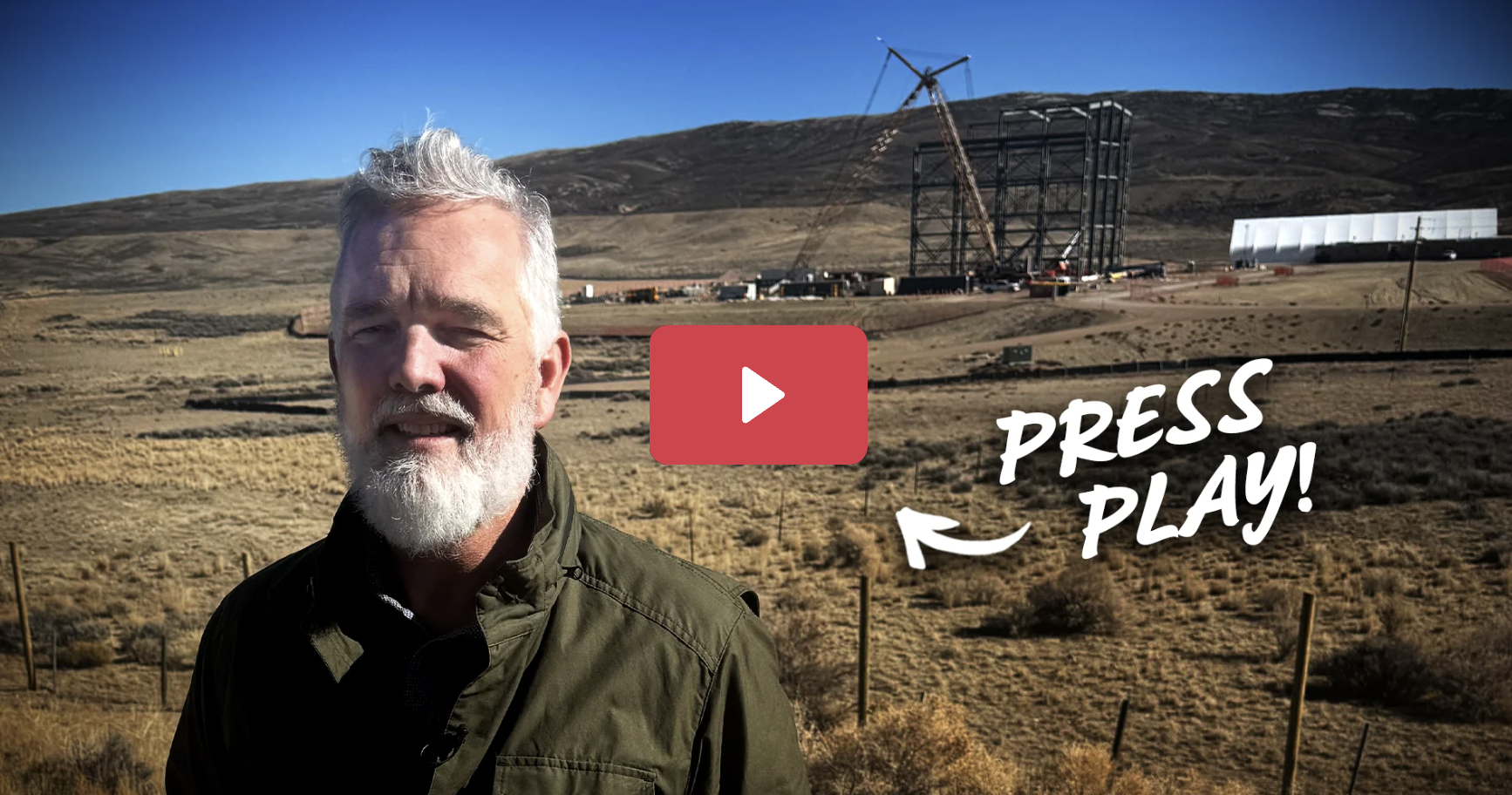
I just took a trip to a forgotten coal town in Wyoming's high desert: Kemmerer.
What we found inside a plain-looking building on the edge of town… shocked me.
This changes everything.
Click here to see |
| | | Flying Robots and the Reality of the Supply Chain | Of course, the hardware guys aren't just sitting on their hands while the software eats the world. They are pushing the physical limits of what these machines can do, and frankly, some of it sounds like straight-up science fiction. | According to Yanko Design, we are seeing at least five major humanoid launches this year, and the designs are getting wild. Take Pudu's FlashBot Arm. It's integrating advanced AI with hyper-sensitive sensors to do real-time 3D mapping and autonomous adaptation. It can handle delicate objects and run for up to eight hours straight. | Then you have the iRonCub3. This thing literally combines humanoid mobility with flight. | A flying humanoid robot. Let that sink in. | But again, as operators, we have to ask: Why? Why do we need a flying robot? Because the real world is messy. Supply chains aren't perfectly flat, climate-controlled environments. They are multi-level, chaotic, and unpredictable. The versatility of a machine that can walk up stairs, fly over a gap, and then gently handle a fragile payload is incredible. | But - and this is a big "but" - none of that physical versatility matters if the machine doesn't know what to do. | The International Federation of Robotics (IFR) just released their top five global robotics trends for 2026, and sitting right at the number one spot is AI & Autonomy. | The IFR specifically calls out the need for "IT-OT integration." That's a fancy, bureaucratic way of saying the digital brain (Information Technology) needs to talk seamlessly to the factory floor (Operational Technology). | If your warehouse inventory system knows you are out of size-10 boots, the robot on the floor needs to know that instantly so it doesn't waste time walking to an empty shelf. The IFR notes that humanoids are finally proving their reliability in these unpredictable environments specifically because of this software integration. | The hardware gets them to the shelf. The software ensures they actually grab the right box. |
| | |
| | | So, where does this leave you? Whether you are running a logistics company, managing an investment portfolio, or just trying to understand where American industry is headed, you need a sober mental model for this shift. | Here is the bottom line: The metal depreciates. The data appreciates. | We are watching the greatest labor and productivity unlock in modern history, but the value isn't going to be captured by the companies stamping out the aluminum legs. The value is going to be captured by the teams building the intelligence layer - the software that allows a machine to walk into a room it has never seen before, assess the environment, and solve a problem without human intervention. | Here are your takeaways to stay ahead of the curve: | 1. Audit your data, not just your hardware.
If you are preparing to deploy physical AI in your business, your limiting factor won't be the $13,000 robot. It will be the cleanliness of your internal data. If your IT systems can't talk to each other, the smartest robot in the world will just stand there waiting for instructions. | 2. Look for the "Edge."
When evaluating robotics platforms, prioritize local compute. As Deloitte pointed out, onboard neural processing is the key to safety and speed. If a vendor requires constant cloud connectivity for basic reasoning, they are already a generation behind. | 3. Invest in the cognitive layer.
For the investors out there, don't get blinded by a viral video of a robot doing a backflip. Look at the companies building the behavioral analysis, the spatial reasoning, and the LLM integrations. That is the true moat. | We are building the future right here on our shores, folks. But defending our economic freedom means we have to be smart about where the real leverage is. The robots will capture the world's attention. But the intelligence will capture the value. |
| | |
|
|




No comments:
Post a Comment