DAILY POSTCARD | WEDNESDAY, JANUARY 28, 2026 |
|
|
Dear International Living reader, You don't find Dublin's real stories nicely laid out sitting under glass. They cling to sea walls, drift along cliff paths, and wait in the hush between waves and stone. Follows the coastline where Vikings fell, fairies supposedly roam, and writers found their muse. Step beyond the city and listen closely—the old Ireland is still there. | |
|
From Viking Massacre to Charming Seaside Suburb |
|
|
Irish history is not grandiose and it doesn't need to have extravagant monuments in its name. It's distinct, it's bittersweet, it's often despondent, and it's uniquely ours. So be under no illusion—Dublin is a place with a historical narrative that can rival some of the most illustrious cities on the planet. But Ireland's history and legends don't live in shopping districts or under mirrored office Blocks. They live along the edges—where land meets sea, and memory meets place. You'll find them in the sweep of Bull Island, in the stones of Howth Castle, in the monks' ruins on Dalkey Island. You'll find them in pubs where poets drank and in cliff walks that feel like passages between worlds. That's the journey we're about to take—chasing myths along the coast of Dublin. Starting just a few miles east of the city center, where a Viking army met its savage end. Welcome to Clontarf. |
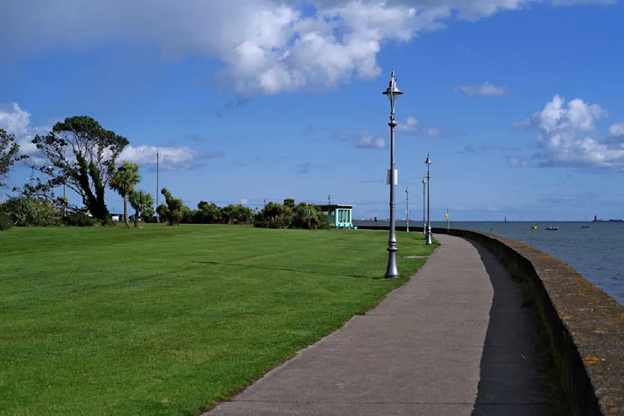
Clontarf's quiet shores hide echoes of Viking battles and Ireland's storied past.© iStock/Wirestock |
On your flight from the urban miasma that is inner Dublin City, the concrete eventually gives way as you pass through Fairview and broach Clontarf. Clontarf is not a flashy place, in spite of what the property costs might suggest. There's no dramatic sheer cliff face, and no imposing castle dominating the vista. Clontarf served as the backdrop for Ireland's "high king" Brian Boru's crushing victory against a horde of Viking invaders in the year 1014. Boru, at this point in his 70s, was murdered in his tent at the culmination of the battle, by a lone Viking who snuck through the lines. Thankfully, modern Clontarf offers a more peaceful environment. For what it lacks in immediate visual impressiveness, it makes up for with a distinguished coastal character. Bull Island is a UNESCO-recognized biosphere, and a must for those with an affinity for the natural world. Trek across the wooden bridge, and if you're feeling brave (and the tide is in!), why not take a plunge—on any kind of warm day, you're sure to see a bunch of locals enjoying a sea swim, so feel free to join in. Or take a wander through St. Anne's park, where if you search hard enough, you'll come across a beautiful, Asian-style Suzhou garden, modeled after what you may find in eastern China—it was actually designed and donated by the Chinese government in 2012, as part of Bloom festival. It's a real treat, a quaint little escape even in the relative peace of the park, and it's even better if you happen to just stumble upon it by yourself. It's in the north-west corner, and that's all the hint you're going to get. Howth—Pensinular Pirates, Yeats, and Seawalks |
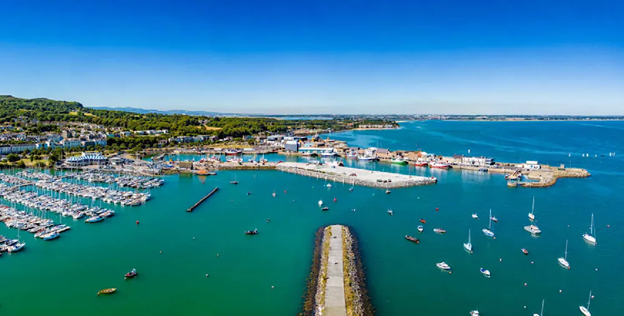
Howth Harbor is full of the hustle and bustle of working fishing boats and leisurely sailing yachts. © iStock/Thomas Faull |
"At Howth… there is a fairies path, whereon a great colony of otherworld creatures travel nightly from the hill to the sea and home again." This is a line from renowned Irish writer and poet William Butler Yeats' essay "Irish Fairies," of which he was apparently a staunch believer. W.B. Yeats's fascination with Irish mythology was likely facilitated by his time staying in a small cottage perched on Balscadden Bay, in Howth. And it's easy to see why. Howth is Dublin's shoulder to the sea, at once tilted, weathered, and yet irresistibly charming. You don't arrive in Howth so much as cross into it. The DART train curves around the headland, and suddenly the landscape shifts, the air sharper, the sea louder. You'll find the harbor bustling with activity, as yachts and small fishing vessels alike moor side by side. In particular, the Howth Cliff Walks feel mythic, like a liminal path between the world of the living and something just beyond it. Much of Yeats' essays and early poems describe the meandering landscape as one in which the world we know and the idea of an ethereal spirit world hover perilously close together. And if you embrace the idea, walking the cliff path today, you can almost feel it: the ancient rhythm of footfall on earth, the sea pounding below like a distant drum. Along these trails, Irish mythology feels present—not in the form of monuments, but in the air itself. One could almost stumble straight into Tír na nÓg without even noticing the shift… On the grounds of the aforementioned Howth Castle, forage and see if you can locate "Aideen's Grave" A dolmen tomb of a warrior's wife, who perished from sheer grief after her husband was killed in battle. Follow the trail downward back towards the train station, where directly underneath, you can pop into the Bloody Stream for a quick pint… The pub's name comes from a great battle in 1177, as part of the second Norman invasion of Ireland. The blood from the fighting mingled with the trickling stream that has so often caused flooding damage to the bar… Dalkey—Saints, Scholars, and Submarines |
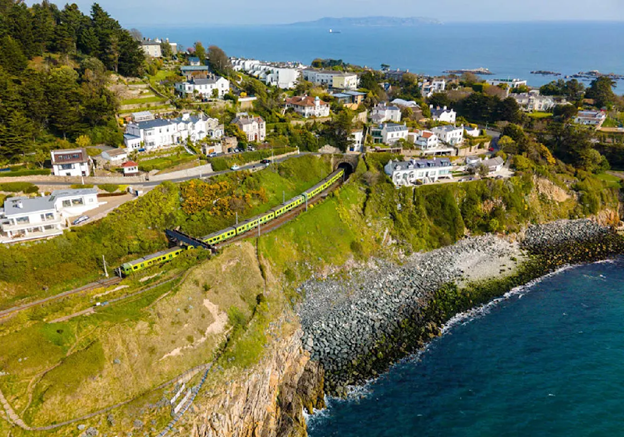
You can enjoy stunning views as the DART chugs its way out towards Dalkey. ©iStock/Denzil Lacey |
Dalkey Island boasts archaeological evidence of inhabitants dating back 6,000 years ago, and upon the arrival of Christianity to the Emerald Isle, it developed a reputation of a place of revered pilgrimage. Referred to mostly as "St. Begnet's" Island, 15th-century sailors believed water collected from the island's well protected them from scurvy. Reportedly, modern water testing revealed a high dose of vitamin C in said water, but again, here's myth and truth jostling at the bar once more… Today you can see the remains of a Martello tower, a relic of the pervasive fear of a Napoleonic invasion, along with monastic ruins. Dalkey town would serve as one of Dublin's preeminent medieval ports, but today, tends to trade in rather different cargo: a prestigious literary heritage, and affluent seaside hangout to the rich and famous (most notable, Bono). Dalkey's reputation as one of Ireland's most notable literary towns cannot be overstated. Simply strolling the streets you'll pass the previous homes of writers and poets like George Bernard Shaw, Maeve Binchy, and playwright Hugh Leonard. Even Flann O'Brien's absurdist novel, The Dalkey Archive, sees characters such as James Joyce and St. Augustine mired deep in conversation aboard a submarine… And yet that seems supremely in character for a place like Dalkey. And on the topic of Joyce, he spent a time in Sandycove, just south of Dalkey, where the famous Martello Tower serves as the opening setting of Ulysses. Today it houses the James Joyce Tower and Museum, perched above the rocks at the Forty Foot. In a more historical lens, and in contrast to its more quaint counterpart in Howth, Dalkey Castle offers one of the more delightfully unhinged historical tours in Dublin. Actors decked out in full regalia will teach you how to kill a man with a crossbow, diagnose the bubonic plague, or prepare for a Viking raid. When visiting Dublin, the city doesn't necessarily reveal itself all at once. You won't find its soul in the shadow of the Spire or on a postcard of the Liffey. In Clontarf's tide-washed quiet, Howth's wind-whipped cliffs, Dalkey's story-soaked streets… The myths aren't dead here. They're just quieter now. Folded into the hills, hidden in tidepools, whispered across pint glasses and skittering across footpaths. And if you look hard enough, you might just begin to hear them. |
|
|
Editor's Note: If Ireland's ancient reputation is something that appeals to you, if you can see yourself chasing myths along the coast of Dublin, or if you want to see if the kinship you've always felt with Ireland has meaning beyond the feeling of connection, now is the perfect time to explore your options with International Living's exclusive reports dedicated to helping US citizens move to Ireland. Inside, you'll discover how to trace your Irish ancestry (if you have it), plus alternate paths that don't require family roots at all. And right now, as part of a limited-time offer, you can get access to this full suite of bonuses with an International Living membership—but only until midnight tomorrow. Get all the details here before the opportunity disappears. |
|
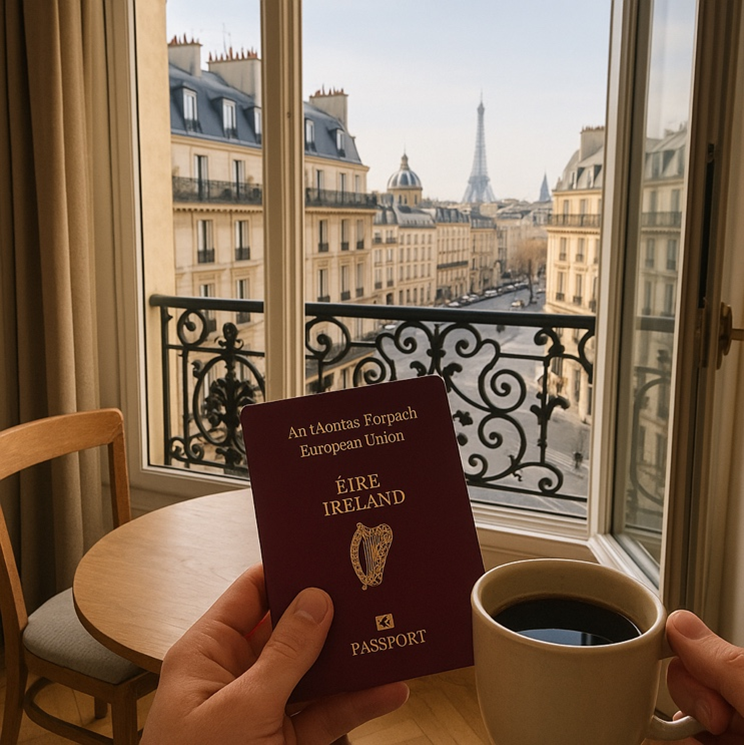
| Learn how millions of Americans are already eligible for an Irish passport—yet most don't even realize it! Click here. |
| |
|
Inbox too crowded? Don't worry—if you can't keep up with our International Living Postcards every day, click here to switch to the Weekly Best of IL Postcards instead. If you no longer wish to receive IL Postcards, click here to unsubscribe. The mailbox associated with this email address is not monitored, so please do not reply. Your feedback is very important to us, so if you would like to contact us with a question or comment, please click here. © 2026 International Living Publishing Ltd. All Rights Reserved. Protected by copyright laws of the United States and international treaties. This newsletter may only be used pursuant to the subscription agreement and any reproduction, copying, or redistribution (electronic or otherwise, including on the world wide web), in whole or in part, is strictly prohibited without the express written permission of International Living, Woodlock House, Carrick Road, Portlaw, Co. Waterford, Ireland. Registered in Ireland No. 285214
Website: www.internationalliving.com Nothing in this e-mail should be considered personalized advice. Although our employees may answer your general customer service questions, they are not licensed under securities laws to address your particular situation. No communication by our employees to you should be deemed as personalized advice. NO-SPAM PLEDGE: We Value Your Privacy. We will NEVER rent, sell, or give away your e-mail address to anyone for any reason. You can unsubscribe at any time. Read the International Living Privacy Policy. Reference Number: |
|
|
|





No comments:
Post a Comment