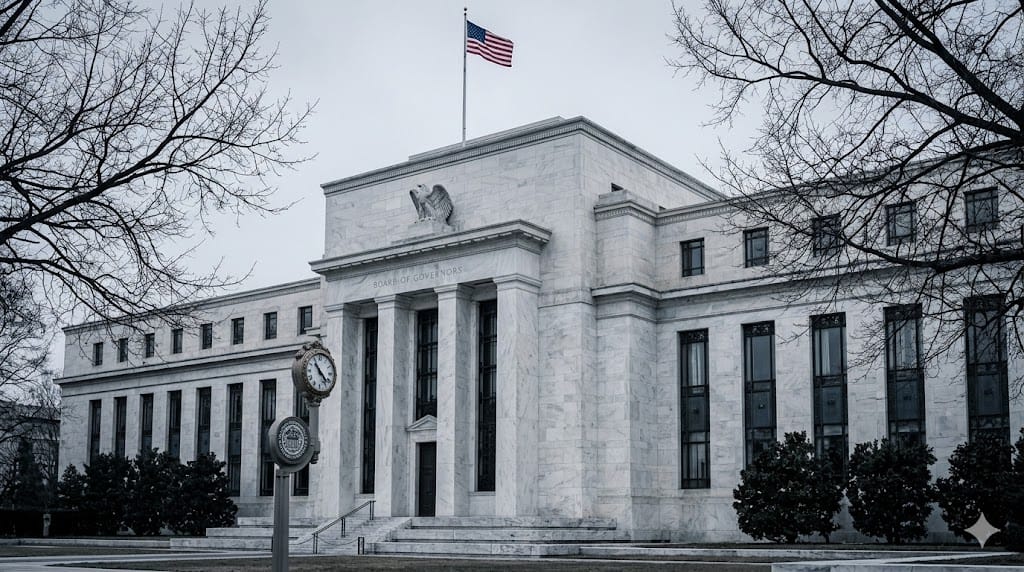
| | | | Most investors are bracing for a rate cut in 2024 or 2025, yet the Fed's latest dot plot projects the first reduction won't occur until 2026, holding rates steady at 3.5%–3.75%. This delayed timeline coincides with a turbulent market backdrop where the S&P 500 has closed below its 200-day moving average for the first time in over 200 sessions, while the 10-year Treasury yield has surged to 4.39%, its highest level since early in the year.
Compounding this liquidity stress test are rising inflation forecasts, with the Fed raising its core PCE projection to 2.7% for 2026, alongside WTI oil prices hovering near $99 per barrel due to Middle East tensions. This convergence of higher-for-longer rates, technical breakdowns, and geopolitical volatility forces investors to fundamentally rethink portfolio positioning against a backdrop where the anticipated easing cycle has been pushed years into the future. |
| |
| | |
| | | | | The Fed's New Timeline: Delayed Cuts | | The Federal Reserve's latest dot plot indicates a significant shift in the expected timeline for rate cuts. Chair Powell noted significant movement among officials toward fewer reductions, with four or five members shifting from two projected cuts down to one. This change, combined with the median projection for a single cut in 2026, signals a more extended period of rate stability than previously anticipated. | The political landscape also adds to the uncertainty. Powell has stated he has no intention of leaving until a DOJ investigation into the Fed's headquarters renovation is resolved, potentially delaying Kevin Warsh's succession past May. This delay introduces an element of unpredictability into the Fed's leadership transition, which could influence policy decisions and market expectations. |
| |
| | |
| | | | | The Gold Standard for AI News | | AI will eliminate 300 million jobs in the next 5 years. | Yours doesn't have to be one of them. | Here's how to future-proof your career: | Join the Superhuman AI newsletter - read by 1M+ professionals Learn AI skills in 3 mins a day Become the AI expert on your team
| Start learning AI now | |
| |
| | |
| | | | | Inflation and Growth: The Policy Cushion Shrinks | The Fed's updated outlook on inflation and GDP signals a more cautious stance on the economy. The median forecast for core inflation in 2026 has been raised to 2.7%, indicating that the Fed expects inflation to remain above its 2% target for a longer period than previously anticipated. This adjustment reflects persistent inflationary pressures despite efforts to cool the economy. | The revised growth forecasts also highlight the challenges ahead. The Fed's median projection for real GDP growth in 2026 has been nudged up slightly to 2.4% from December estimates. This upward revision underscores resilient growth despite rising interest rates and stubborn price pressures. | The combination of higher inflation and steady growth creates a more challenging environment for policymakers, who must balance the need to control inflation with the risk of slowing economic activity. Higher inflation expectations can lead to higher borrowing costs for businesses and consumers, dragging on output and compressing corporate margins. |
| |
| | |
| | | | | Market Rotation and Technical Breakdown | | The market's recent performance indicates a shift in investor sentiment, with the S&P 500 breaking below its long-term trend line for the first time in roughly 200 trading days. This technical breakdown suggests that the market may be entering a period of consolidation or correction, as investors reassess their positions in light of the broader economic outlook. | The rotation in market leadership reflects a move away from high-growth sectors, such as technology and artificial intelligence, towards more defensive sectors, including energy and consumer staples. This shift in sentiment is driven by concerns about the sustainability of economic growth and the potential impact of higher interest rates on corporate earnings. The move from an AI narrative toward a defensive rotation is telling. | The technical indicators suggest growing volatility ahead, with the S&P 500 trading below key support levels. Investors are taking a more cautious approach, adjusting portfolios for a prolonged period of elevated rates and persistent price pressures. The market's reaction to upcoming economic data will be crucial in determining the next phase of movement. |
| |
| | |
| | | | | The Oil and Geopolitical Wildcard | | The recent geopolitical tensions in the Middle East have created significant uncertainty in the oil market, with WTI crude prices near $99 per barrel. This volatility is driven by the potential for further escalation in the conflict, which could disrupt oil supply and push prices even higher. The situation is further complicated by the U.S. military's increased presence in the region, including the deployment of Marine convoys, which could have implications for both supply and demand dynamics. | The impact of these geopolitical developments on oil prices is a key concern for investors, as higher prices can lead to increased inflationary pressures and reduce consumer spending. The situation in the Middle East highlights the vulnerability of global energy markets to regional conflicts, which can have far-reaching economic consequences. | The potential for further escalation underscores the importance of monitoring geopolitical developments and their impact on oil prices. The uncertainty surrounding crude adds another layer of complexity to the Fed's monetary policy decisions. Higher oil prices could reinforce inflationary momentum, limiting the Fed's ability to ease even if growth falters. | This scenario would have implications for various asset classes, including equities, bonds, and currencies. The geopolitical developments also highlight the importance of diversifying energy sources and reducing dependence on oil. |
| |
| | |
| | | | | Credit Stress Signals: The Squeeze Tightens | The current market environment presents a unique set of challenges for investors, particularly in the realm of credit markets. The Fed's extended rate timeline, combined with Middle East tensions, has created a scenario where liquidity conditions are tighter than market sentiment suggests. | This situation is compounded by elevated borrowing costs that weigh on economic activity and corporate balance sheets. The combination of above-target inflation expectations and decelerating momentum creates a landscape where traditional safe-haven assets may not provide the expected returns. | Diversification remains critical for managing portfolio risk in this environment. The recent outflows from bond ETFs and the increased redemptions in private credit markets are signals that investors are becoming more cautious in their investment strategies. | These developments reflect a broader shift in market sentiment, as participants reposition for a world where rate relief arrives far later than consensus expected. The potential for further volatility in the credit markets underscores the importance of maintaining a diversified portfolio that can withstand various market conditions. |
| |
| | |
|
|






No comments:
Post a Comment